
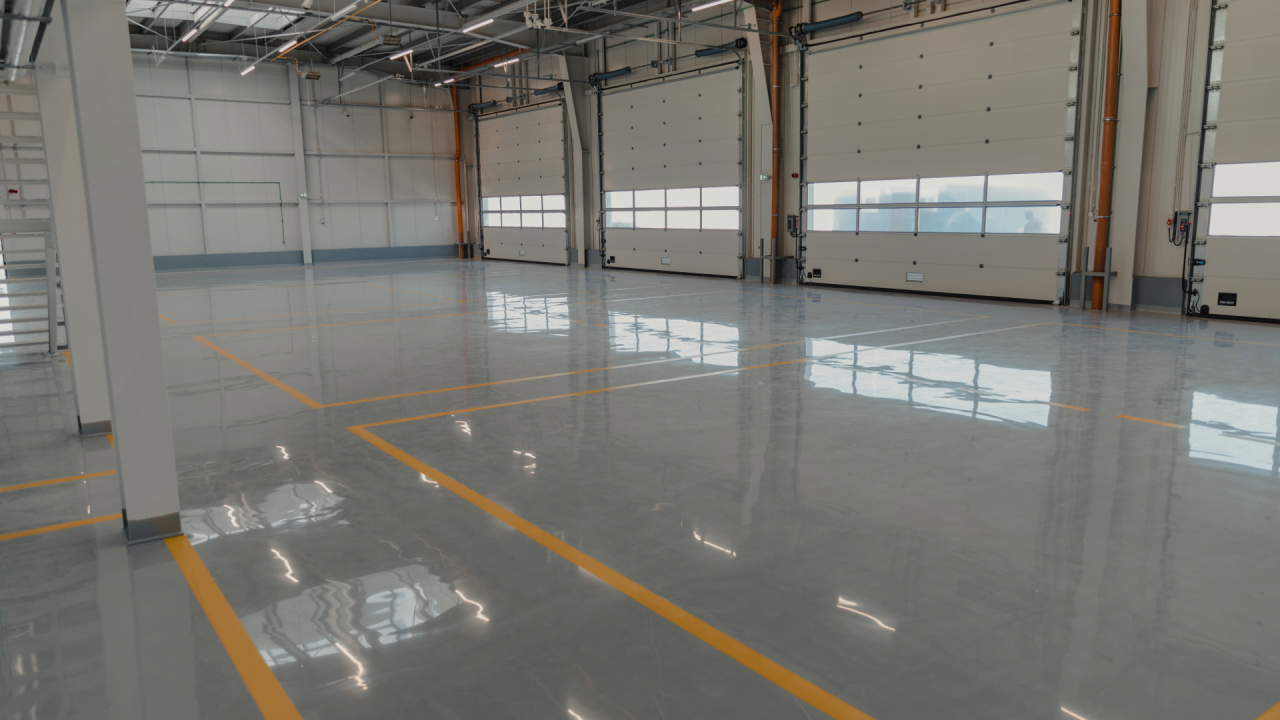
Industrial and light-manufacturing facilities in Henrietta are a different world from a law office or a doctor’s waiting room. Forklifts, pallet jacks, rolling carts, heavy machinery, foot traffic in steel-toed boots, chemical spills, lubricant migration, and cleaning cycles that happen in the middle of an active shift — these are daily realities on an industrial floor. And most of them are actively destroying the floor finish with every hour that passes.
The question is not whether an industrial floor in Henrietta will deteriorate. It will. The question is whether facility managers treat that deterioration as a maintenance issue on a schedule, or whether they wait until the floor becomes a safety problem, a compliance liability, or a replacement cost.
What Makes Industrial Floor Care Different From Standard Commercial Cleaning
In an office building or retail store, floor finish wears relatively slowly and predictably. In an industrial environment in Henrietta — particularly along the Marketplace Drive corridor and Jefferson Road industrial parks — wear is concentrated, aggressive, and often chemical in nature.
Forklift wheel paths cut through floor finish faster than foot traffic ever could. Oils and lubricants from machinery migrate to the floor surface and degrade wax finish chemically. Cleaning in industrial facilities often involves stronger alkaline degreasers than any office would ever use, and those degreasers accelerate finish breakdown dramatically. Without a proactive maintenance program, an industrial floor in Henrietta can go from freshly waxed to finish-exhausted in as little as two to three months under heavy-use conditions.
The Safety Argument That Facility Managers Cannot Ignore
OSHA regulations on walking and working surfaces require that floors in industrial and manufacturing environments be maintained in a condition that does not create slip, trip, or fall hazards. A worn, bare, or oil-contaminated floor surface fails that standard. Slip-and-fall incidents in industrial settings result in lost-time injuries, workers’ compensation claims, OSHA recordable incidents, and — in severe cases — regulatory citations and fines.
Professional floor stripping removes oil contamination, embedded grime, and degraded finish. Fresh commercial floor finish applied afterward provides a clean, sealed surface with appropriate traction characteristics. The result is measurably safer than the bare floor alternative, and it documents that the facility has taken proactive steps to address the walking surface condition. See why skipping professional floor maintenance creates serious problems for Rochester area businesses.
Oil and Grease Removal Before Waxing: A Step Most Services Skip
Applying new wax finish over an oil-contaminated floor is a waste of time and money. The wax will not adhere properly, will peel within days, and will produce uneven results that look worse than the bare floor. Dimensional Services addresses oil and grease contamination as a prerequisite step before any stripping and waxing process begins in an industrial environment.
We use commercial degreasers at appropriate concentrations for the contamination level present, followed by thorough rinsing to neutralize the floor chemistry before any finish is applied. This preparation step is what separates a professional result that lasts from an amateur application that fails quickly.
What Floor Types Are Common in Henrietta Industrial Facilities?
Sealed concrete is the most common floor surface in Henrietta industrial and warehouse facilities. VCT and epoxy coatings are also common in office areas within industrial buildings, break rooms, and corridor sections that connect manufacturing areas to administrative spaces. Dimensional Services services all of these surface types, applying the right process for each.
Protecting the Office-to-Floor Transition Areas
Many Henrietta industrial buildings have a clear visual divide: the manufacturing or warehouse floor, and then the administrative or break room area. That transition zone — where industrial foot traffic meets finished interior space — takes some of the worst floor abuse in the entire building. Workers carry contamination from the floor on their boots. The hallway outside the break room and the reception area near the building entrance are often the most visually deteriorated areas in the entire facility.
These transition areas are particularly important for visitor and client impressions. Prospective partners, auditors, or customers walking through a Henrietta facility form opinions in those hallways. A worn, dull transition floor communicates a maintenance culture that may not reflect the actual quality of operations inside. Learn to identify the specific signs that your commercial floors need stripping rather than basic cleaning.
Scheduling Around Production and Shift Schedules
Dimensional Services understands that Henrietta industrial operations often run around the clock. We build floor maintenance schedules around your production calendar — targeting scheduled downtime, weekend shutdowns, or maintenance windows where the floor area can be vacated long enough for the strip and wax process to be completed safely.
We are fully licensed, insured, and bonded, and our team has experience working in active industrial environments where access coordination and safety awareness are non-negotiable requirements.
Frequently Asked Questions
How often should an industrial facility in Henrietta strip and wax its floors?
Heavy-use industrial areas typically require stripping and waxing every two to four months. Administrative and break room areas within the same building may only need service once or twice a year. Dimensional Services will evaluate each zone separately and recommend the appropriate schedule for each area.
Can floor wax handle forklift traffic in a Henrietta warehouse?
Commercial floor finish is not designed for direct forklift wheel path areas with continuous heavy forklift traffic. However, for light industrial facilities, manufacturing floor perimeters, and administrative-to-floor transition zones, commercial floor finish provides meaningful protection and significantly extends the service life of the underlying floor surface.
What happens if we apply wax over a contaminated industrial floor?
The wax will not bond properly to the floor and will begin to peel or flake within days. Oil and grease must be fully removed before any wax product can be applied. Dimensional Services handles degreasing as a prerequisite step at no additional charge as part of the overall service.
Is there a floor wax product appropriate for facilities that use heavy cleaning chemicals?
Yes. Dimensional Services uses high-solids commercial floor finish products rated for environments with more aggressive cleaning chemistry. These products have greater chemical resistance than standard commercial finishes and last longer in facilities where diluted industrial cleaners are used regularly.
Do you work in occupied Henrietta industrial facilities?
We prefer to work in areas that have been vacated for safety and quality reasons. For large facilities, we can section off and service one area at a time, coordinating with facility management to minimize production impact.
Keep Your Henrietta Facility Safe, Compliant, and Clean
Industrial floor maintenance is not optional when worker safety and facility standards are on the line. Dimensional Services has been serving industrial and commercial clients in Henrietta and throughout Monroe County for over 20 years.
Call 585-206-3131 or request your free facility estimate online. We work around your production schedule to keep your floors in safe, professional condition.