
BLUF
If your commercial floors still look dull, scuffed, uneven, or dirty after routine cleaning, the problem is probably not your janitorial service alone. It is often a worn out floor finish that needs stripping and waxing. I see this across Rochester, Greece, Irondequoit, Henrietta, Brighton, Pittsford, Penfield, Webster, Chili, Gates, and neighborhoods like Downtown Rochester, Charlotte, Park Avenue, North Winton Village, and Corn Hill. When businesses ignore these warning signs, they do not only risk a tired looking property. They risk damage to public image, weaker customer trust, and lost revenue that never shows up on a cleaning invoice.
Why This Problem Gets Misread So Often
One of the biggest mistakes I see is assuming that every floor problem is a cleaning problem. A business notices that the floors look dull or worn, so the first thought is often simple. Clean them more. Mop them again. Scrub them harder. Increase the frequency. Have the staff pay more attention to the problem areas.
Sometimes that helps for a short period. Many times it does not.
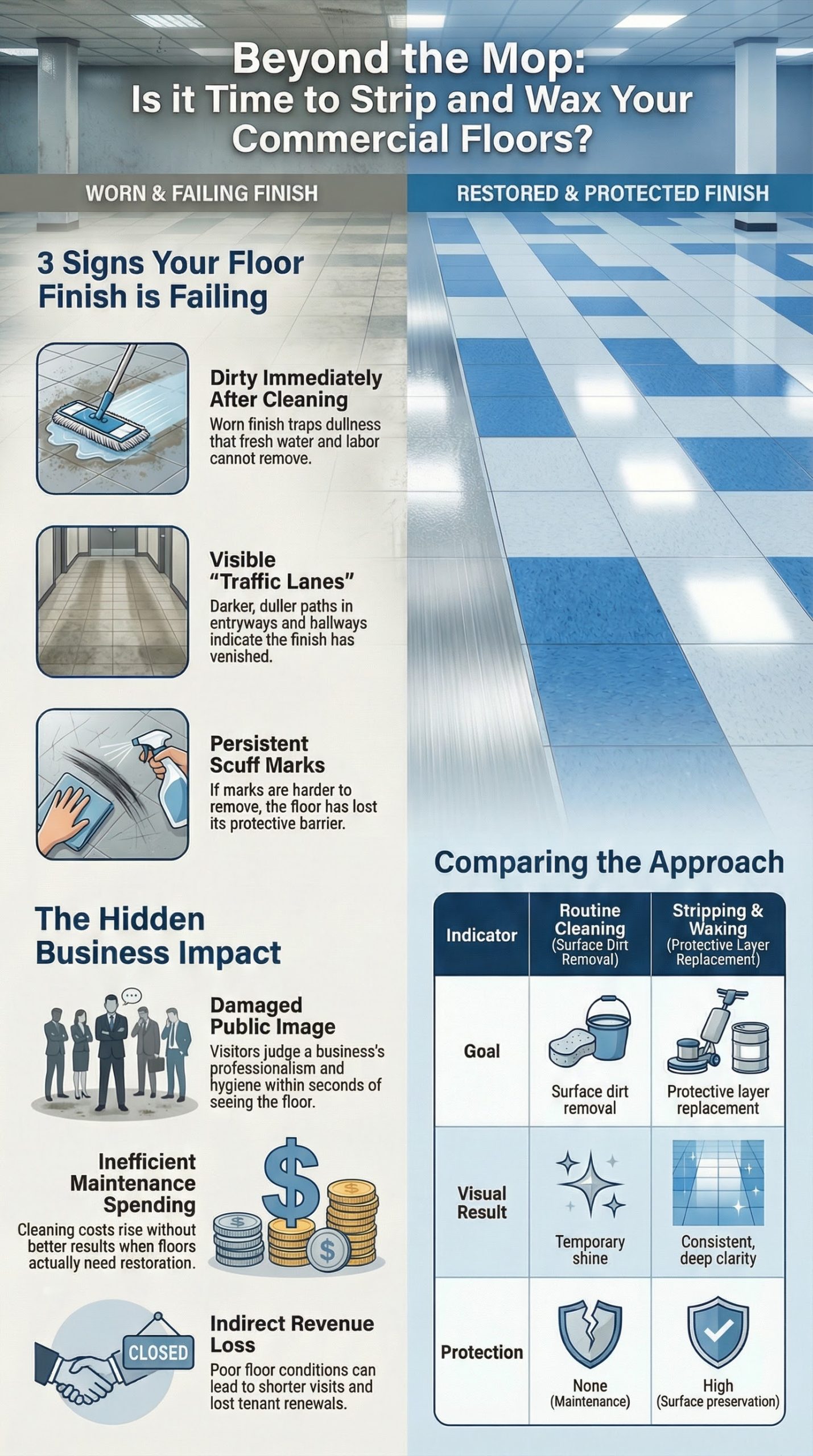
That is because there is a major difference between a dirty floor and a worn floor. A dirty floor needs proper cleaning. A worn floor often needs the old finish removed and a new protective layer applied. If that step never happens, the floor can keep looking bad no matter how often it gets cleaned.
A Bad Looking Floor Creates the Wrong Story
People judge the condition of a business within seconds. They may not say anything about the floor directly, but they absolutely absorb what it communicates. In a medical office in Brighton, a retail store in Pittsford, an office in Downtown Rochester, or an apartment common area in Irondequoit, the floor is part of the first impression.
If the floor looks cloudy, scuffed, stained, or worn down, the space can feel neglected. That feeling spreads fast. Customers may question the professionalism of the business. Tenants may question how well the property is managed. Patients may question the cleanliness of the environment. Shoppers may question the quality of what is being sold.
That is where public image starts taking a hit.
Sign One: The Floor Still Looks Dirty Right After Cleaning
This is one of the clearest warning signs. If the floor gets cleaned and still looks tired, there is a good chance routine cleaning is no longer enough.
Clean Water and More Labor Will Not Fix Worn Finish
When the finish has broken down, the floor can hold onto a dull, gray, or uneven appearance even after a fresh cleaning. I see this all the time in high traffic commercial spaces across Henrietta, Webster, and Greece. The team may be doing the cleaning correctly, but the floor still looks old because the protective finish has already been worn down.
A manager may assume the cleaning crew is missing something. In reality, the floor may be beyond what basic day to day care can solve.
This Hurts Public Confidence Fast
Think about a customer walking into a business where the floor looks dirty right after service. They do not know whether the problem is buildup, finish failure, or surface wear. They only know the place does not look as clean as it should. That perception matters. It can quietly reduce confidence in the business before a word is spoken.
Sign Two: Traffic Lanes Are Easy to See
Traffic lanes are one of the most visible indicators that a floor needs stripping and waxing. These are the paths where people walk the most, and they usually appear darker, duller, or more worn than the surrounding floor.
The Busiest Areas Reveal the Truth First
Entryways, hallways, check in areas, lobbies, elevator zones, and common corridors usually show the earliest signs of finish failure. In Rochester area properties, especially during wet and winter seasons, these areas take a beating from moisture, grit, dirt, and road salt.
If you can clearly see walking paths across the floor, the finish is often no longer protecting the surface the way it should.
Uneven Wear Makes a Building Feel Older
This kind of wear sends a message whether you want it to or not. In a store, it can make the whole space feel less polished. In an office, it can make the company look less organized. In a multi tenant building, it can make the property feel less professionally managed. That visual decline can shape how people feel about doing business with you.
Sign Three: Scuff Marks Keep Coming Back
Scuffing is normal in commercial environments. What matters is whether the floor can recover from it.
Recurring Scuffs Point to Protection Failure
If marks keep showing up and seem harder to remove each week, it often means the floor has lost much of its protective layer. A properly maintained finish should help absorb daily abuse and respond better to routine maintenance. When the floor is no longer protected, marks tend to cling to the surface and become part of the building’s visual identity.
That is a problem.
Scuffed Floors Quietly Damage Brand Perception
A business may spend money on signage, décor, service quality, and marketing while ignoring the condition underfoot. Yet the floor is one of the largest visible surfaces in the building. If it looks beat up, it can undercut everything else the business is trying to communicate.
I have seen this happen in retail spaces, professional offices, and medical environments. The team works hard to look polished, but the floor keeps saying something else.
Sign Four: The Shine Is Uneven or Completely Gone
A floor does not need to look glossy to look professional. But it should look consistent. When some areas are faded, others are cloudy, and a few still reflect light, that unevenness is usually a sign the finish has broken down.
Inconsistency Is What People Notice
Most visitors will not inspect your floors closely. They will notice the overall impression. Uneven finish makes the space feel patchy and neglected. In neighborhoods like Park Avenue, Corn Hill, Charlotte, and North Winton Village, where presentation matters for local businesses and property owners, that kind of inconsistency can quietly chip away at reputation.
Visual Decline Can Affect Buying Behavior
People are more likely to trust and spend money in spaces that feel well maintained. That is not theory. It is real world behavior. If a floor makes the business look run down, customers may stay shorter, feel less comfortable, or choose a competitor next time. In a retail or service setting, even a small drop in repeat business can turn into meaningful revenue loss over time.
Sign Five: High Traffic Areas Always Look Worse Than the Rest
All floors wear unevenly. The question is how bad the difference has become.
The Building Starts Looking Hard to Manage
When the entry area, hallway, or waiting space always looks worse than the rest of the building, it changes how people interpret the property. It can make the entire operation feel reactive instead of well managed. In office buildings in Rochester, apartment properties in Greece, and commercial spaces in Gates or Chili, this often becomes a problem long before ownership decides to address it.
That First Visual Hit Can Cost You
The first few seconds matter. If a prospect, tenant, patient, or customer walks into a building and sees visibly worn traffic zones, that moment shapes expectation. The visit begins with doubt instead of confidence. For some businesses, that doubt affects whether someone signs a lease, makes a purchase, books a service, or recommends the property to someone else.
That is where floor neglect becomes a revenue issue.
Sign Six: Your Floors Make the Whole Space Feel Less Clean
This is especially important in healthcare, professional services, hospitality, and any customer facing environment.
The Floor Can Undermine the Entire Room
You can have clean counters, organized desks, and good lighting, yet still have the room feel off because the floor looks tired. That is because people process the environment as a whole. If the floor looks worn, the entire space can feel less sanitary or less cared for.
In a medical building in Brighton or a professional office in Pittsford, that matters more than many people realize.
The Cost of Doubt Is Real
When people start questioning the condition of your space, they may also question the quality of your service. That does not always show up as a complaint. Sometimes it shows up as hesitation. Sometimes it shows up as a shorter visit. Sometimes it shows up as a lost opportunity that nobody can trace back to the floor.
That is what makes this issue dangerous. The financial damage is often indirect, but it is still real.
Sign Seven: Routine Cleaning Costs Keep Going Up Without Better Results
This is one of the most frustrating signs for property managers and business owners.
You Keep Spending, But the Floor Keeps Looking Bad
When a floor needs stripping and waxing, throwing more routine cleaning at it usually creates diminishing returns. More labor gets invested, but the visual result barely changes. The floor still looks worn, and the building still feels harder to keep looking presentable.
At that point, the problem is not simply dirt. The floor needs restoration.
This Is Where False Savings Catch Up
Some businesses delay stripping and waxing because they want to avoid the cost. But if they keep pouring time and labor into routine maintenance without solving the real issue, they often spend money inefficiently while the floor continues to decline.
That can lead to two losses at once. Public image slips, and maintenance dollars get wasted.
How Loss in Public Image Turns Into Loss in Revenue
A dull or worn floor does not send an invoice labeled lost revenue, but the business impact is real.
Retail and Customer Facing Environments
In retail, appearance affects comfort, trust, and buying mood. A tired looking floor can make the store feel lower quality. That can reduce how long people stay, how they perceive the merchandise, and whether they come back.
Medical and Professional Offices
In professional settings, environment affects credibility. If the space looks neglected, visitors may unconsciously connect that feeling to the business itself. That can affect referrals, retention, and confidence.
Apartment and Multi Tenant Properties
In apartment buildings, common area condition shapes leasing impressions and tenant satisfaction. A worn floor in the lobby or hallway can make the whole property feel less premium. That can influence renewals, tour outcomes, and how residents talk about the building.
My View on the Right Time to Act
I believe the right time to strip and wax a commercial floor is before the public can clearly see the decline. Once customers, tenants, staff, or visitors start noticing the problem, the floor has usually been overdue for a while.
The Warning Signs Are Usually Obvious Once You Know Them
If your floors still look dirty after cleaning, show clear traffic lanes, hold onto scuff marks, have uneven shine, or make the building feel less clean overall, I would not treat that as a simple cleaning issue. I would treat it as a sign that the floor finish needs restorative attention.
The Bottom Line
The signs that your commercial floors need stripping and waxing instead of basic cleaning are not just maintenance clues. They are business warnings. Across Rochester, Greece, Irondequoit, Henrietta, Brighton, Pittsford, Penfield, Webster, Chili, Gates, Downtown Rochester, Charlotte, Park Avenue, North Winton Village, and Corn Hill, I see the same pattern again and again. Businesses wait too long, the floor starts hurting public image, and the hidden cost shows up in trust, perception, and revenue.
When your floors begin making the business look less clean, less polished, or less professionally managed, the issue is no longer just about appearance. It is about what that appearance is costing you.
If your commercial floors are making your building look tired, neglected, or harder to keep clean, now is the time to act. Let Dimensional Services help restore your floors and protect the image your business projects every day. Contact us today for a free estimate.